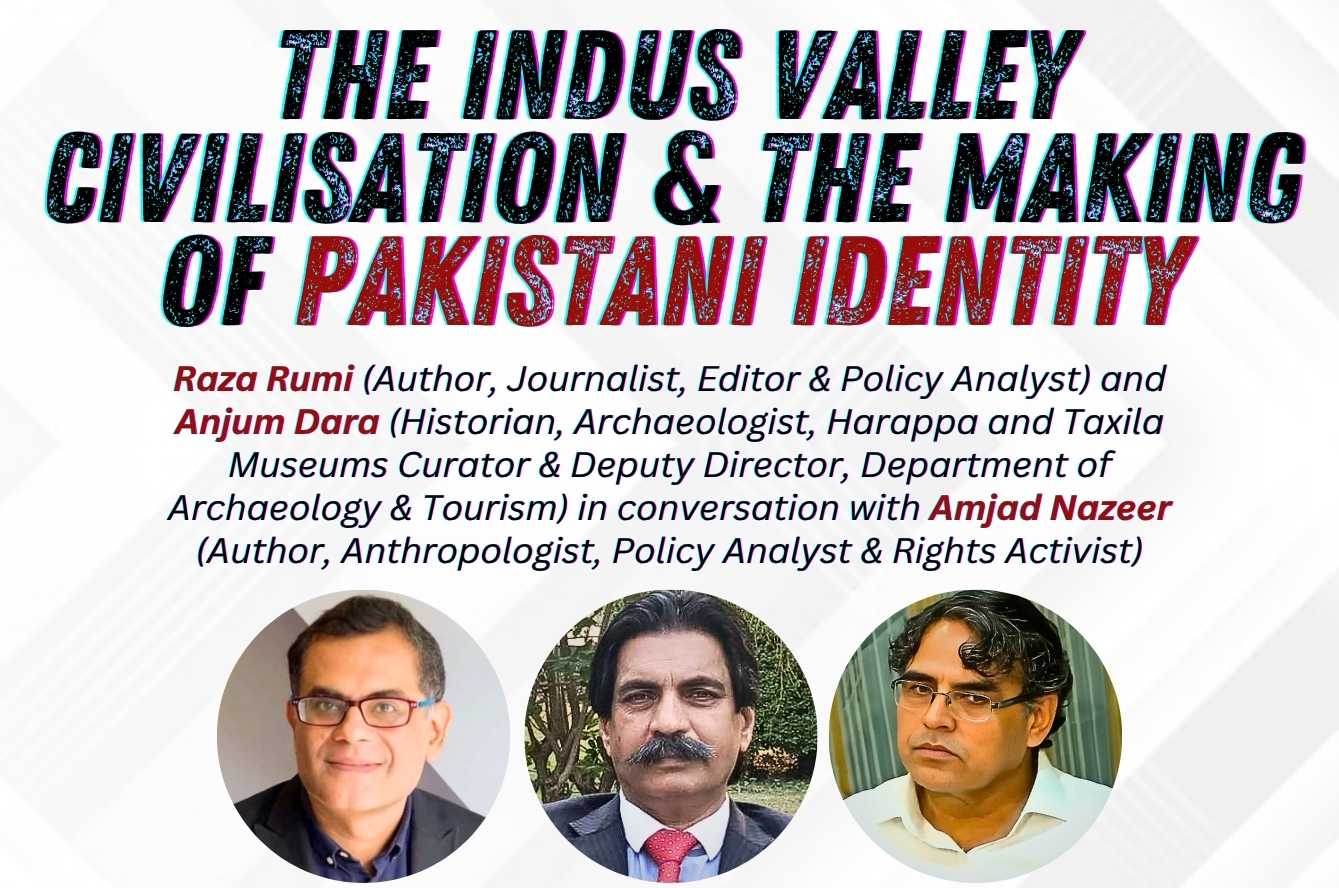
The Indus Valley Civilisation and the Making of Pakistani Identity
What stories do nations tell about themselves, and how do those stories shape the way people understand their history, culture, and identity? Can a civilization that flourished thousands of years ago still speak meaningfully to the present? And what might the legacy of the Indus Valley Civilization reveal about the diversity, complexity, and continuity of the land we now call Pakistan?
From the cities of Mohenjo-daro and Harappa to the many cultures that emerged along the Indus River, the history of this region stretches back thousands of years, transcending modern borders, languages, and political divisions. Yet questions about the relationship between ancient civilizations and contemporary national identity continue to inspire debate among historians, archaeologists, writers, and intellectuals.
This session will explore the historical, cultural, and intellectual significance of the Indus Valley Civilization and examine the role that civilizational memory, archaeology, literature, and historical interpretation play in shaping ideas of nationhood and belonging. The discussion will also reflect upon the ways in which societies remember, reinterpret, and sometimes rediscover their past in order to understand their present and imagine their future.
About the Speakers:
- Raza Rumi
(Author, Journalist, Editor & Policy Analyst) - Anjum Dara
(Historian, Archaeologist, Harappa and Taxila Museums Curator & Deputy Director, Department of Archaeology & Tourism) - Amjad Nazeer
(Author, Anthropologist, Policy Analyst & Rights Activist)
This session is free and open to all. Just visit the venue to attend it.
The Black Hole
Plot 5H, Street 100, G-11/3, Islamabad.
Click here for Google Maps Location