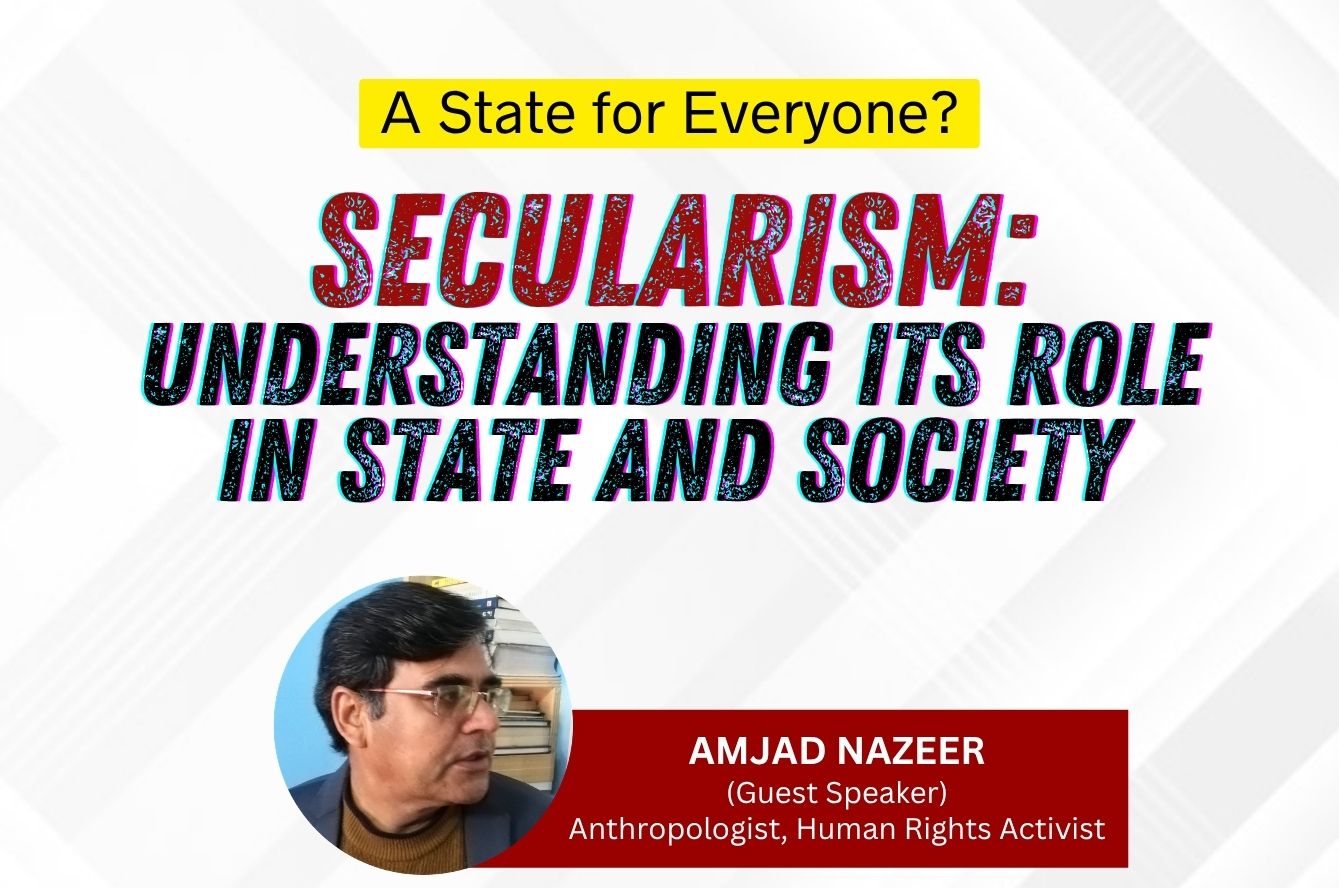
Secularism: Understanding Its Role in State and Society
Secularism is one of the most debated – and often misunderstood – ideas in discussions about religion, politics and modern society. For some, it represents freedom of belief and equal citizenship. For others, it is associated with hostility towards religion or the exclusion of faith from public life.
But what does secularism actually mean?
This session will move beyond popular assumptions and explore the idea of secularism in its different forms and interpretations. What does it mean for a state to remain neutral among different religious beliefs, or between belief and non-belief? How might secularism shape citizenship, individual freedoms, minority rights and the relationship between state and society? Most importantly, can a society remain deeply religious while its state treats all citizens equally, regardless of their faith?
About the Speaker:
Amjad Nazeer is a dedicated social and public policy researcher, as well as a human and environmental rights defender. Currently pursuing a Ph.D. in Cultural Anthropology, he holds degrees in Governance & Development Management (UK), M.Phil. in Human Rights Policy & Practice (Norway), and Social Anthropology from Quaid-e-Azam University (Pakistan). He has authored numerous research reports, booklets, op-eds, and news articles on human rights, minority rights, child rights, and education.
This session is free and open to all. Just visit the venue to attend it.
The Black Hole
Plot 5H, Street 100, G-11/3, Islamabad.
Click here for Google Maps Location